


Reviewed by Kathryn Vercillo, MA Psychology | Last Updated: November 2025
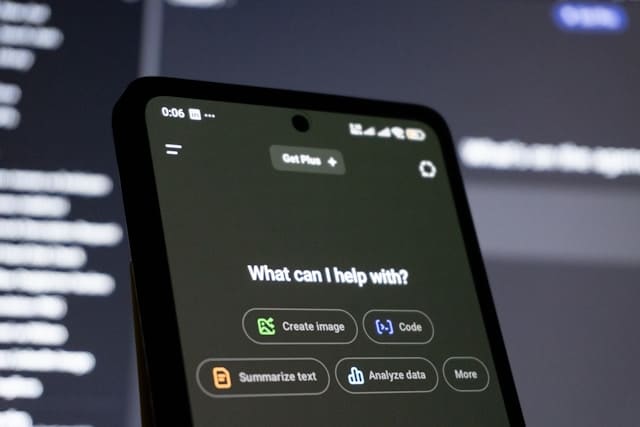
You have probably downloaded at least one. Maybe several. The meditation app that promised to ease your anxiety. The mood tracker that was supposed to help you understand your patterns. The chatbot that offered cognitive behavioral therapy techniques at 2 AM when you could not sleep.
These apps are not useless. In fact, they can be genuinely helpful tools. But if you have been relying on them as your primary mental health support and wondering why you still feel stuck, you are not alone. Millions of people turn to mental health apps hoping for transformation, only to find that something essential is missing.
Here is what that something is, and why it matters more than you might think.
First, let’s acknowledge the appeal
There are real reasons people reach for apps instead of therapists. Apps are available immediately, with no waitlists or scheduling hassles. They are often free or low cost compared to therapy sessions. They offer privacy; you can work on your mental health without telling anyone or leaving your home. For people who feel nervous about opening up to a stranger, an app feels safer.
These are legitimate considerations. The American Psychological Association recently noted that the digital mental health space has grown enormously, with apps offering everything from mood tracking to structured therapeutic interventions. This growth reflects genuine need and genuine innovation.
But there is a crucial distinction between tools that support general wellness and actual clinical treatment. And when it comes to the deeper work of understanding yourself, healing old wounds, and creating lasting change, apps have fundamental limitations that no amount of artificial intelligence can overcome.
Browse our Therapist Directory
1. A therapist sees what you cannot see about yourself
You know that voice in your head? The one narrating your experience, explaining your reactions, telling you why you do what you do? That voice has blind spots. Significant ones.
A skilled therapist observes patterns you cannot observe in yourself. They notice when your body tenses at certain topics, when your voice changes quality, when you minimize something significant or rush past an emotion. They track themes across sessions that you might never connect on your own.
An app only knows what you tell it. It cannot notice that you always change the subject when your father comes up, or that you hold your breath when discussing your job, or that the “fine” you report feeling contradicts everything in your posture and tone.
So much of our emotional experience lives in the body rather than in conscious thought. A therapist trained in somatic approaches can read this information and help you access what lies beneath your own awareness. An app simply cannot.
2. A therapist responds to you, not to an algorithm
Mental health apps use decision trees and algorithms to determine their responses. Even sophisticated AI chatbots are pattern matching based on your input, selecting from predetermined response options. They do not actually understand you; they process your words and generate statistically appropriate replies.
A human therapist responds to the unique, irreducible reality of who you are in this moment. They bring intuition, clinical judgment, and genuine care to each interaction. When something unexpected emerges, they can follow it. When their usual approach is not working, they can try something entirely different.
This responsiveness matters because healing is not linear or predictable. The moment that shifts everything might come from an offhand comment, a gentle challenge, a question no algorithm would think to ask. Human attunement creates possibilities that programmed responses never can.

3. A therapist provides a relationship, and relationship heals
This might be the most important point on this list. Research consistently shows that the therapeutic relationship itself is one of the most powerful predictors of positive outcomes in therapy. The experience of being truly seen, heard, and accepted by another person creates change at a level that techniques alone cannot reach.
Many psychological wounds are relational in origin. Experiences of rejection, neglect, criticism, or misattunement shape how we see ourselves and what we expect from others. These wounds often cannot heal in isolation. They need a different relational experience to shift.
When you work with a therapist, you are not just learning coping skills or gaining insight. You are having a corrective emotional experience. You are discovering that it is possible to be vulnerable and met with care, to be imperfect and still accepted, to be truly known and not abandoned.
No app, however sophisticated, can offer this. A chatbot cannot care about you. It cannot hold space for your pain. It cannot be moved by your courage or celebrate your growth with genuine feeling. The healing power of human connection requires an actual human.
4. A therapist helps you access what words cannot capture
Therapeutic approaches often work with experience that exists beneath or beyond language. Core beliefs, early attachment patterns, trauma responses: these live in implicit memory and bodily sensation, not in the verbal narratives we tell ourselves.
Apps operate entirely in the realm of language. You type or speak your input; the app generates text or audio in response. But the most transformative therapeutic work often happens in silence, in sensation, in the space between words. A therapist can guide you into these nonverbal dimensions of experience where the deepest patterns reside.
Approaches like EMDR, Brainspotting, Somatic Experiencing, and Hakomi work directly with the nervous system and body in ways that cannot be replicated through an app interface. These modalities access material that talking, journaling, and cognitive exercises simply cannot reach.

5. A therapist holds you accountable with compassion
Apps are easy to ignore. You can skip days, weeks, months. You can abandon one app and download another without any conversation about what happened. There is no continuity, no accountability, no one noticing your patterns of engagement and avoidance.
A therapist gently holds you accountable. Not in a punitive way, but in a caring way that helps you show up for yourself. When you miss sessions, your therapist wonders about it with you. When you avoid certain topics, they notice. When you are ready to quit just as things get hard, they help you understand what is happening and make a conscious choice rather than an automatic retreat.
This compassionate accountability is not comfortable, but it is often exactly what creates change. We naturally avoid what is painful or frightening. Having someone who helps us stay present with difficulty, who does not let us off the hook but also does not shame us, makes it possible to do the work we would otherwise flee.
6. A therapist can actually diagnose and treat
The American Psychological Association has highlighted an important distinction between wellness tools and clinical treatment. Apps that promote general wellbeing through relaxation or mood tracking are fundamentally different from actual therapeutic intervention for mental health conditions.
If you are struggling with depression, anxiety, trauma, relationship difficulties, or other clinical concerns, you deserve actual treatment from a qualified professional. A therapist can properly assess what you are experiencing, provide an accurate conceptualization of your difficulties, and offer evidence based treatment tailored to your specific needs.
Apps making therapeutic claims are increasingly subject to regulatory scrutiny because the stakes are real. When someone with a serious condition relies on a wellness app instead of seeking treatment, their suffering may continue unnecessarily. When an app provides generic advice that misses the nuances of someone’s situation, it can even cause harm.
This does not mean apps have no role. But that role is as a supplement to professional care, not a replacement for it. Think of it like fitness apps: they can support your exercise routine, but they cannot replace a physical therapist when you have an injury that needs proper treatment.
7. A therapist grows and changes alongside you
Your therapeutic journey is not static. What you need in month one differs from what you need in month twelve. The focus that made sense when you started may give way to entirely different concerns as you grow and change.
A therapist adapts and evolves with you. They remember your history, track your progress, and adjust their approach as your needs shift. They can go deeper as you build trust and capacity. They can celebrate your growth because they have witnessed the entire journey.
Apps offer the same experience every time. They do not remember your breakthroughs or build on previous sessions. Each interaction starts relatively fresh, without the accumulated understanding that makes therapy increasingly powerful over time.
The therapeutic relationship deepens with time in ways that create exponentially greater possibility for change. This developmental arc, this shared history, this evolving partnership cannot exist with an app.

Apps as allies, not alternatives
None of this means you should delete your mental health apps. Used well, they can complement therapy beautifully. A meditation app can support the mindfulness skills you are developing with your therapist. A mood tracker can provide useful data to discuss in sessions. A journaling app can help you process between appointments.
The key is understanding what apps can and cannot do. They can remind, support, and reinforce. They cannot see, attune, relate, or heal. They are tools, potentially valuable ones, but tools require a skilled hand to use them well.

Finding your therapist
If you have been relying on apps and sensing their limits, you are ready for something more. At Center for Mindful Therapy, our collective includes over 140 Associate Marriage and Family Therapists offering a wide range of approaches. Whether you are drawn to body centered work, mindfulness based therapy, EMDR, or other modalities, you can find practitioners whose style resonates with what you are seeking.
We offer both in person sessions throughout the San Francisco Bay Area and telehealth for anyone in California. Browse our therapist directory to find someone whose background and approach feel right, and many of our therapists offer brief consultation calls so you can get a sense of the fit before committing.
Your mental health deserves more than an algorithm. It deserves someone who can truly see you.