
Reviewed by Kathryn Vercillo, MA Psychology | Last Updated: June 2026
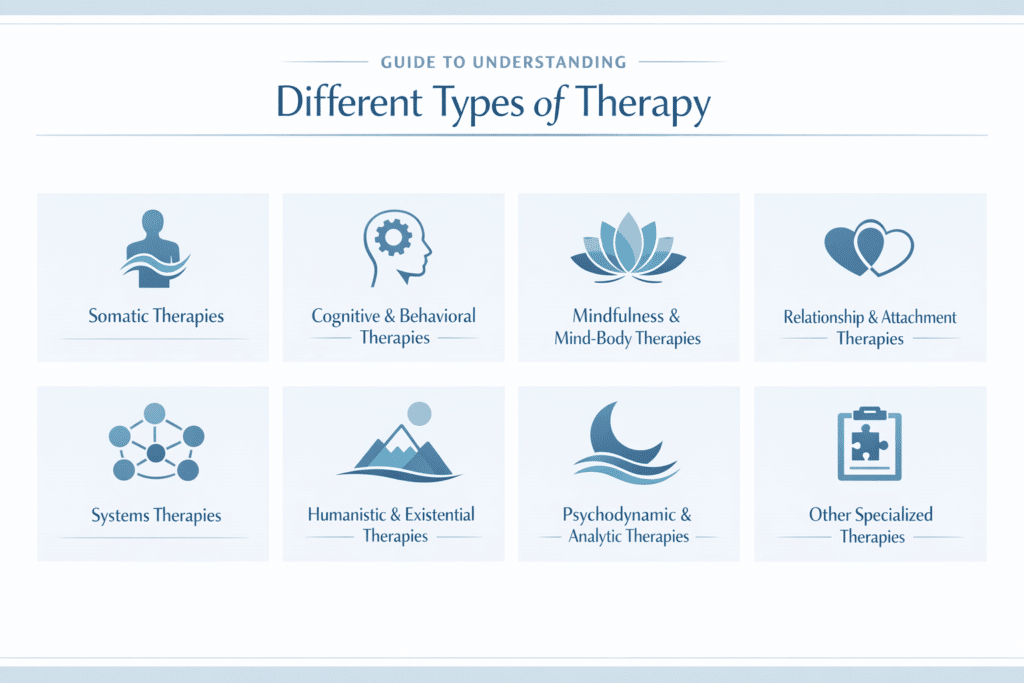
Our therapists draw from a wide range of therapeutic traditions. This page offers a brief description of some of the many approaches available at Center for Mindful Therapy, organized by category. Many therapists integrate methods from more than one tradition; this guide is meant to orient you, not limit your options. You don’t have to know which type of therapy is right for you; your therapist can assist you in figuring that out. However, reading about the different therapeutic modalities helps some people in their search for the right therapist. Click any approach to learn more, or browse our Therapist Directory to find practitioners trained in the methods that interest you.
Browse our Therapist Directory
Somatic Therapies
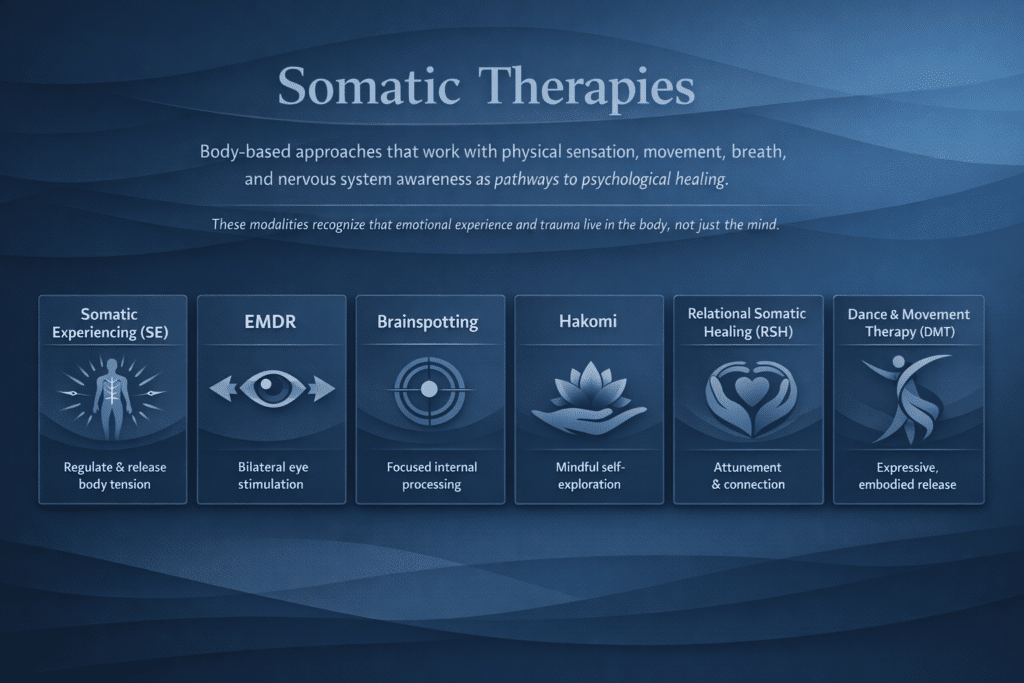
Body-based approaches that work with physical sensation, movement, breath, and nervous system awareness as pathways to psychological healing. These modalities recognize that emotional experience and trauma live in the body, not just the mind.
- Somatic Therapy An integrative body-based approach that uses awareness of physical sensation, breath, and movement to help process stored emotional experience and build lasting nervous system regulation skills.
- Somatic Experiencing Therapy (SE) Developed by Peter Levine, SE helps complete survival responses that were interrupted during overwhelming events, releasing bound energy that has been generating anxiety, hypervigilance, or shutdown.
- EMDR (Eye Movement Desensitization and Reprocessing) Uses bilateral stimulation including guided eye movements, tapping, or auditory tones to help the brain process traumatic memories and disturbing experiences at a neurological level.
- Brainspotting Uses specific eye positions to access and process material stored deep in the subcortical brain, often producing rapid shifts without requiring extensive verbal retelling of difficult experiences.
- Hakomi Therapy A mindfulness-centered somatic approach that uses gentle experiential experiments to surface and explore the core beliefs and early decisions shaping a person’s present experience.
- Relational Somatic Healing (RSH) Emphasizes the therapeutic relationship as a primary vehicle for healing, drawing from attachment theory, breathwork, mindful movement, and sometimes therapeutic touch to address developmental and relational wounds.
- Dance and Movement Therapy (DMT) Uses creative movement and improvised physical expression as the primary language for psychological exploration, making it especially valuable for those who find purely verbal approaches limiting.
Cognitive and Behavioral Therapies
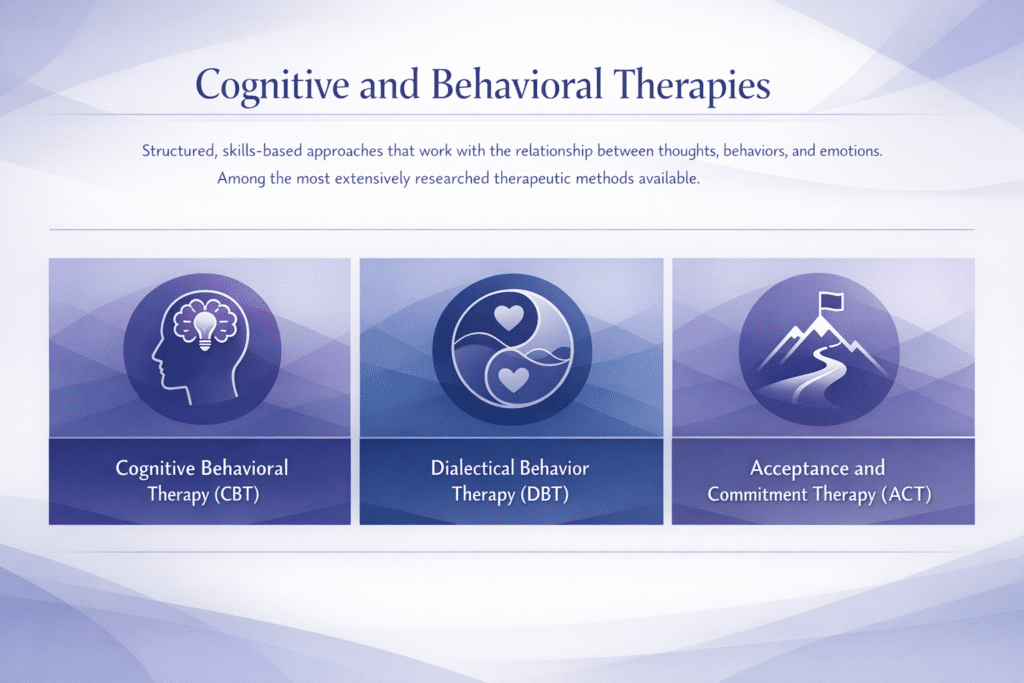
Structured, skills-based approaches that work with the relationship between thoughts, behaviors, and emotions. Among the most extensively researched therapeutic methods available.
- Cognitive Behavioral Therapy (CBT) Helps clients identify and change unhelpful thought patterns and the behaviors that maintain them, building practical skills for managing anxiety, depression, and a wide range of other concerns.
- Dialectical Behavior Therapy (DBT) Combines cognitive-behavioral techniques with acceptance and mindfulness strategies, teaching concrete skills for emotional regulation, distress tolerance, interpersonal effectiveness, and mindfulness.
- Acceptance and Commitment Therapy (ACT) Focuses on building psychological flexibility: learning to accept difficult internal experiences rather than fighting them, while committing to action aligned with personal values.
Mindfulness and Mind-Body Therapies

Approaches that integrate present-moment awareness, breath, and nervous system science into the therapeutic process to support emotional balance, resilience, and the capacity for genuine rest.
- Mindfulness Therapy Integrates meditative awareness and present-moment attention into psychotherapy, helping clients observe thought and emotional patterns without being controlled by them.
- Polyvagal Informed Therapy Draws from Stephen Porges’ Polyvagal Theory to help clients understand and work with their nervous system states, building the capacity for safety, connection, and regulation.
- ANS Regulation and Nervous System Support Focuses specifically on restoring flexibility to the autonomic nervous system through breathwork, grounding, and other regulation techniques for people stuck in chronic stress, anxiety, or shutdown.
- Safe and Sound Protocol (SSP) An evidence-based listening program developed by Stephen Porges that uses specially filtered music to retune the nervous system and support improved social engagement, emotional regulation, and sensory processing.
Relational, Attachment and Systems Therapies
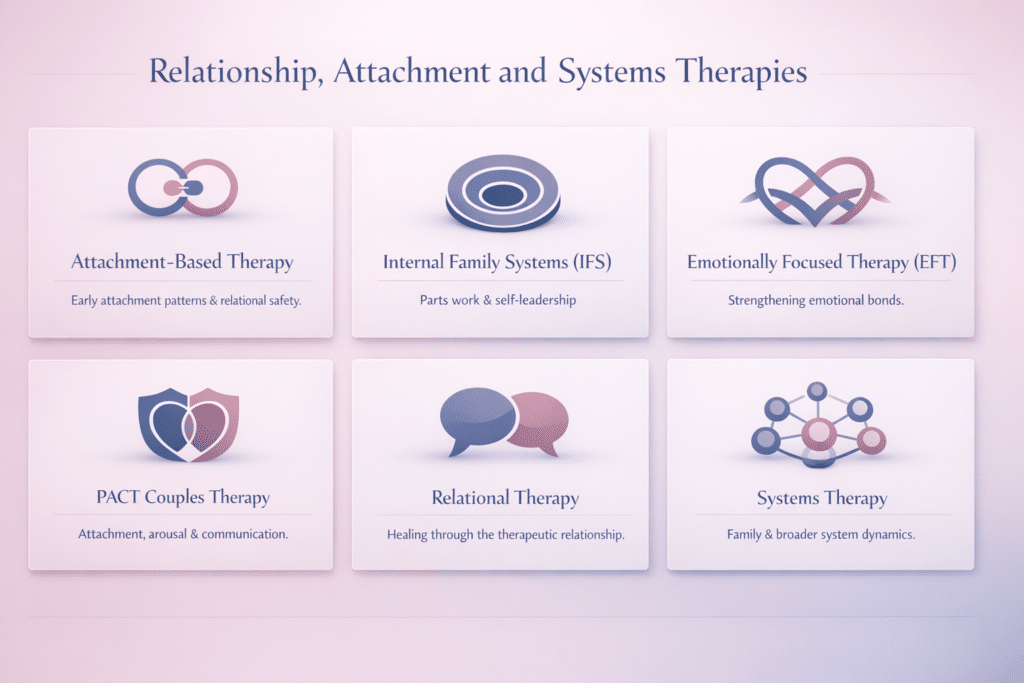
Approaches that examine how we relate to others and to ourselves within relational and systemic contexts, whether in couples, families, or the broader patterns formed through early attachment.
- Attachment-Based Therapy Draws from attachment theory to understand how early bonds with caregivers shape relational patterns, emotional regulation, and sense of self, and to build more secure ways of connecting.
- Internal Family Systems (IFS) Understands the mind as made up of distinct parts with different roles and histories, working to help clients access their core Self and heal the burdened parts that drive difficult patterns.
- Emotionally Focused Therapy (EFT) Primarily used with couples and families, EFT works with emotional experience and attachment needs to shift negative interaction cycles and build more secure bonds.
- PACT Couples Therapy The Psychobiological Approach to Couples Therapy integrates neuroscience, attachment theory, and arousal regulation to help partners develop deeper understanding and more secure connection.
- Relational Therapy Centers the therapeutic relationship itself as the primary agent of change, recognizing that healing often happens through corrective relational experiences rather than insight alone.
- Systems Therapy Views individuals within the context of the larger systems they belong to, including families, couples, and social structures, recognizing that change in one part of a system affects the whole.
Humanistic and Existential Therapies
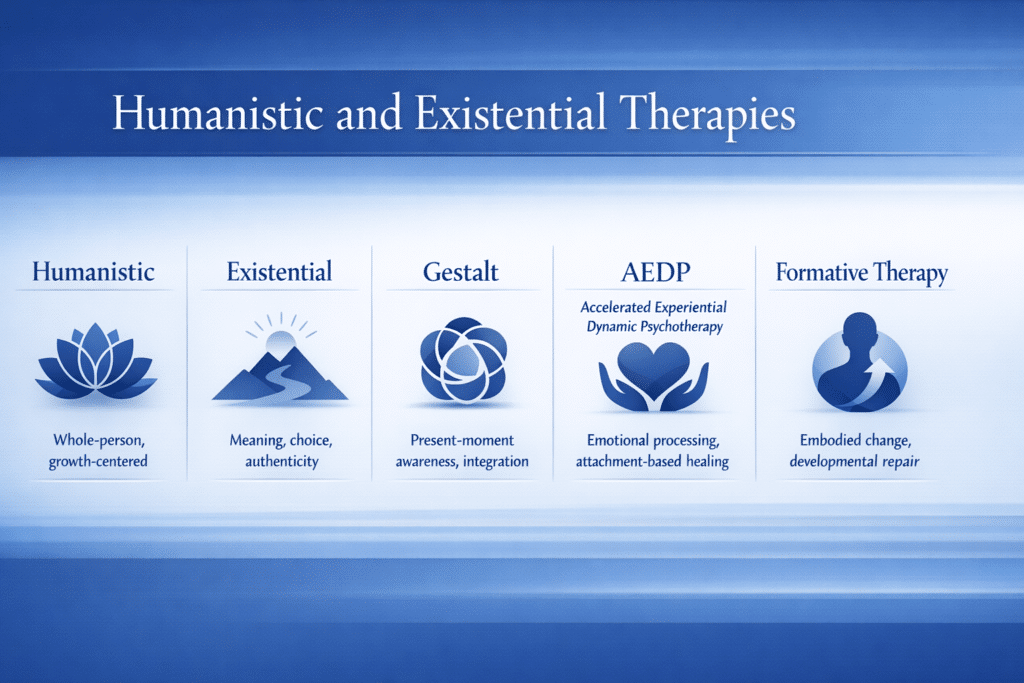
Approaches that center the whole person rather than a diagnosis, exploring meaning, authenticity, choice, and the full range of human experience as pathways to growth and healing.
- Humanistic Therapy Emphasizes the inherent worth and growth potential of every person, creating a therapeutic relationship grounded in unconditional positive regard, empathy, and genuine presence.
- Existential Therapy Explores the fundamental questions of human existence including meaning, freedom, isolation, and mortality, helping clients live more authentically in the face of life’s uncertainties.
- Gestalt Therapy Focuses on present-moment awareness and the integration of fragmented aspects of self, using experiential techniques to increase self-awareness and personal responsibility.
- AEDP (Accelerated Experiential Dynamic Psychotherapy) A relationally focused approach that works with emotional experience in real time, helping clients access healing emotions and transformative states that were previously unavailable to them.
- Formative Therapy Rooted in the work of Stanley Keleman, Formative Therapy explores how life experience shapes the body’s structure and movement, and how working with that embodied form supports psychological change.
Psychodynamic and Analytic Therapies
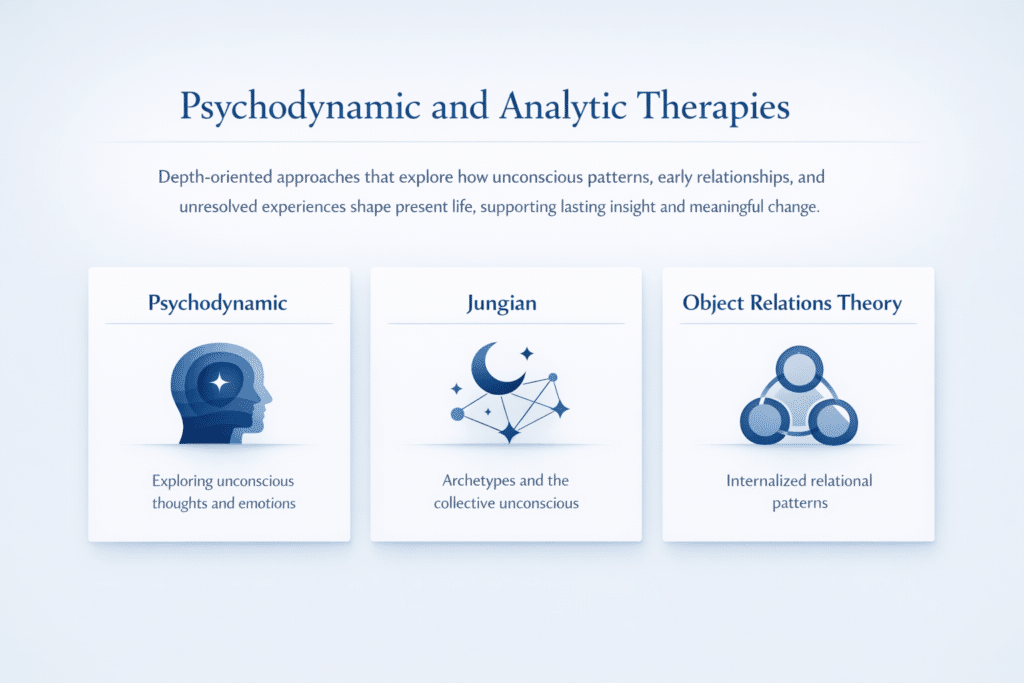
Depth-oriented approaches that explore how unconscious patterns, early relationships, and unresolved experiences shape present life, supporting lasting insight and meaningful change.
- Psychodynamic Therapy Examines how unconscious processes, defense mechanisms, and past relationships influence current thoughts, feelings, and behavior, with the therapeutic relationship itself serving as a vehicle for insight.
- Jungian Therapy Draws from Carl Jung’s analytic psychology to explore the unconscious through dreams, symbols, and archetypes, supporting individuation and the integration of all aspects of the self.
- Object Relations Theory Focuses on how early relationships with caregivers become internalized as mental templates that shape how we relate to others and ourselves throughout life.
Other Specialized Therapies
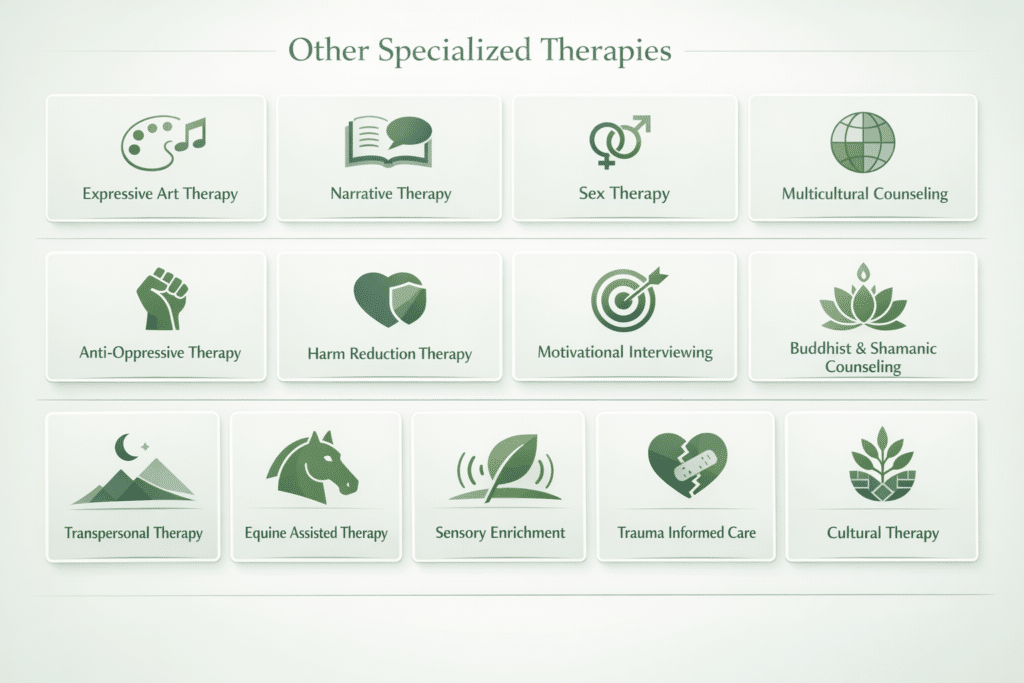
A range of approaches addressing specific contexts, communities, and ways of healing that honor the diversity of human experience and the many paths to wellbeing.
- Expressive Art Therapy Uses visual art, writing, music, and other creative modalities as therapeutic tools, providing nonverbal pathways for expression, processing, and self-discovery.
- Narrative Therapy Helps clients separate their identity from their problems by examining the stories they tell about themselves and co-authoring new narratives that reflect their values and preferred ways of being.
- Sex Therapy Addresses a wide range of sexual concerns and challenges including intimacy, desire, dysfunction, and identity, in a clinical, non-judgmental context.
- Multicultural Counseling Centers cultural context as fundamental to the therapeutic process, working with clients in ways that honor the role of race, ethnicity, culture, and lived social experience in their wellbeing.
- Anti-Oppressive Therapy Explicitly acknowledges the impact of systemic oppression, discrimination, and social inequality on mental health, working in solidarity with clients to understand and resist these forces.
- Harm Reduction Therapy A non-abstinence-based approach to substance use and other behaviors that prioritizes reducing harm and improving quality of life, meeting clients where they are without judgment.
- Motivational Interviewing A collaborative, person-centered approach to exploring ambivalence about change, drawing out a client’s own motivation and commitment rather than imposing external pressure.
- Buddhist and Shamanic Spiritual Counseling Integrates contemplative and indigenous spiritual traditions with psychological practice for clients who seek a spiritually grounded approach to healing.
- Transpersonal Therapy Addresses the full spectrum of human experience including spiritual, mystical, and transcendent dimensions, supporting growth beyond conventional ego-based identity.
- Equine Assisted Therapy Uses interaction with horses as a therapeutic modality, building emotional regulation, empathy, boundaries, and self-awareness through experiential work with animals.
- Sensory Enrichment A neurodevelopmentally informed approach that uses multisensory stimulation to support brain development, regulation, and functional improvement.
- Trauma Informed Care Not a single modality but a framework: an approach to therapy that recognizes the widespread impact of trauma and integrates that understanding into every aspect of clinical practice.
- Cultural Therapy Works specifically with the intersection of cultural identity and psychological wellbeing, addressing how cultural background, migration, and acculturation shape a person’s inner world.
Not sure which approach is right for you?
You don’t need to decide before reaching out. Browse our Therapist Directory to find practitioners trained in the approaches that interest you, or contact us and we’ll help point you in the right direction.
Browse our Therapist Directory
Interested in learning about the many different topics and areas of challenges that people bring to therapy? Read our Guide to What Therapy Can Help With.
Additional Resources:
Mental Health Match: Glossary of Therapy Approaches and Modalities
Mental Health Match maintains one of the most comprehensive publicly available glossaries of therapeutic approaches, covering more than 80 modalities from ACT and AEDP to somatic experiencing and yoga therapy. The resource is written accessibly for people who are exploring therapy options and trying to understand what different approaches involve before choosing a therapist. Mental Health Match has helped more than 500,000 people begin their therapy journey, and their glossary reflects practical, client-centered descriptions of how each modality works and who it tends to serve.
National Council of Integrative Psychotherapists: Glossary of Therapeutic Modalities
The National Council of Integrative Psychotherapists is an accrediting and regulatory body for psychotherapists, counselors, and hypnotherapists, and their therapeutic modalities glossary is written specifically to help members of the public understand the range of approaches available to them. Entries cover both widely practiced and more specialized modalities, with plain-language descriptions grounded in professional standards. As an accrediting body setting benchmarks in mental health practice, the NCIP brings institutional authority to these definitions that general-audience resources cannot offer.
Psychology Today: Types of Therapy
Psychology Today is one of the most visited mental health information sites in the United States, and their Types of Therapy resource offers concise, clinically grounded overviews of the major therapeutic approaches used in contemporary practice. Written for a general audience and reviewed by mental health professionals, the resource covers the theoretical foundations, typical applications, and evidence base for each approach. Psychology Today’s breadth of coverage and professional editorial standards make it a trusted reference for anyone beginning to research therapeutic options.
Therapy Wisdom: Therapist Glossary
Therapy Wisdom’s therapist glossary provides practitioner-oriented definitions of therapeutic approaches, written with enough clinical depth to be useful for both therapists and informed clients seeking to understand the landscape of available modalities. The resource covers a wide range of approaches and is organized for easy navigation by anyone wanting to move beyond surface-level descriptions into a more substantive understanding of how different therapeutic frameworks operate. It serves as a useful bridge between the general-audience glossaries and the academic literature on therapeutic practice.