

Reviewed by Kathryn Vercillo, MA Psychology | Last Updated: June 2026
Browse our Therapist Directory
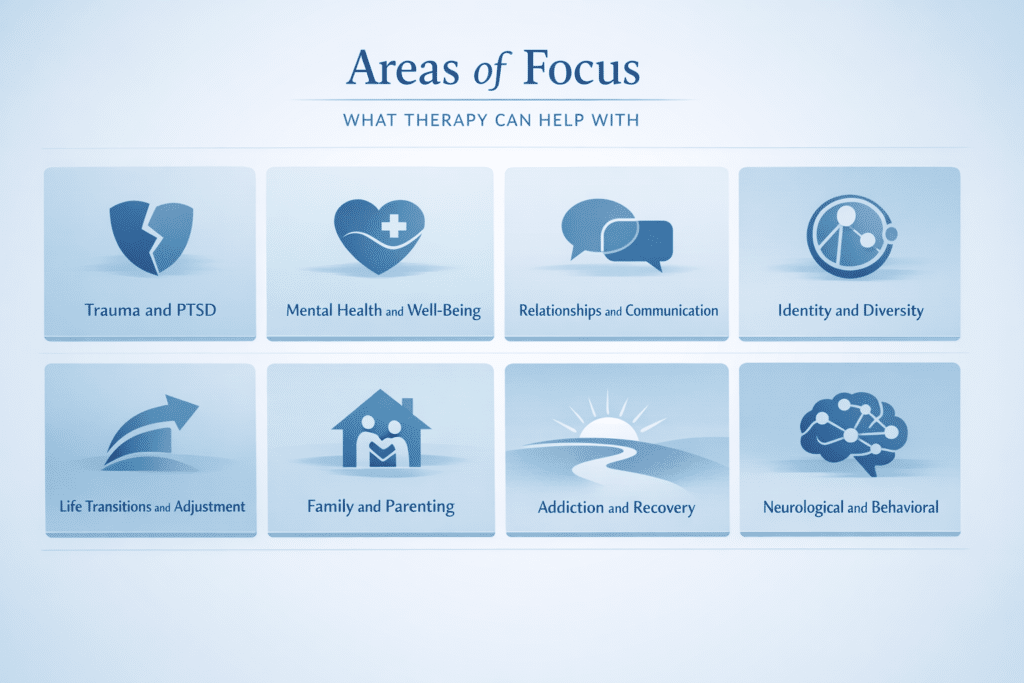
People come to therapy carrying many different kinds of experiences. This page offers a description of the varied areas of focus our therapists work with, organized by category. You don’t need to find the perfect label for what you’re going through. If something on this list resonates, that’s enough to start. Click any topic to learn more, or contact us and we’ll help connect you with a therapist whose experience matches what you’re bringing.
Trauma and PTSD
Support for people whose past experiences continue to shape their present in ways that feel limiting, frightening, or out of their control. Trauma work at CMP is paced carefully and always client-led.
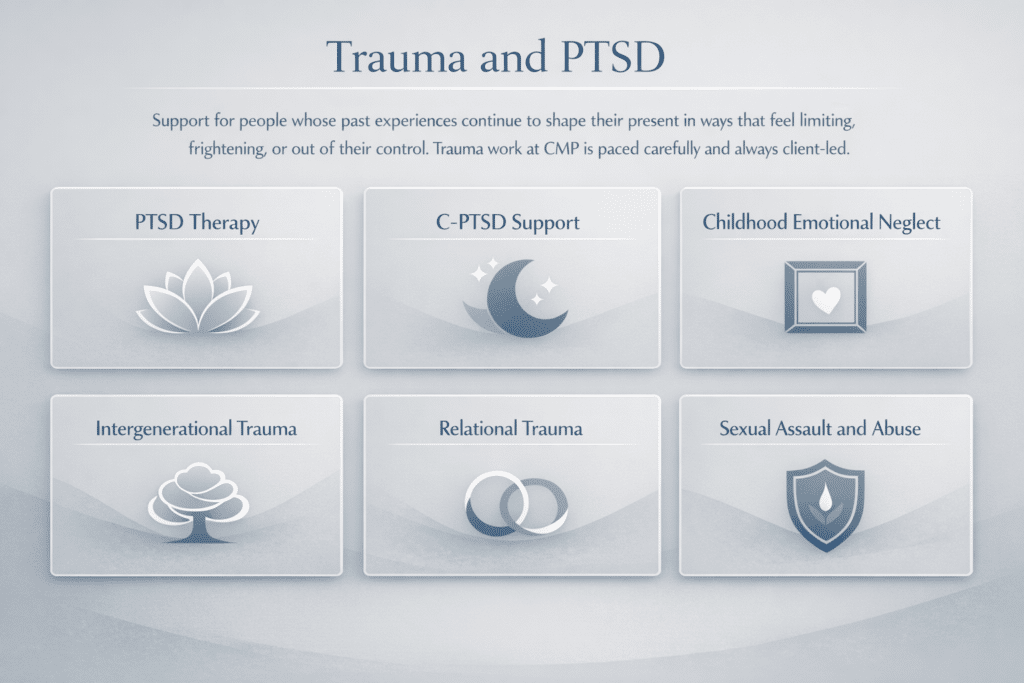
- PTSD Therapy for post-traumatic stress disorder, addressing intrusive memories, hypervigilance, avoidance, and the nervous system dysregulation that follows overwhelming experiences.
- Complex Trauma and PTSD Support for people whose trauma was prolonged, repeated, or relational in nature, often resulting in deep impacts on identity, trust, emotional regulation, and sense of safety.
- PTSD and Complex Trauma Integrated work addressing both acute traumatic events and the layered effects of chronic or developmental trauma.
- Childhood Emotional Neglect Addresses the lasting effects of emotional needs that were consistently unmet in childhood, including difficulty identifying feelings, low self-worth, and challenges with intimacy.
- Intergenerational Trauma Explores how traumatic experiences and their effects are transmitted across generations through family systems, parenting patterns, and sometimes epigenetic pathways.
- Relational Trauma Addresses trauma that occurred within close relationships, including emotional abuse, betrayal, abandonment, and the erosion of trust in connection.
- Sexual Assault and Abuse Trauma-informed support for survivors of sexual violence at any stage of their healing, provided in a safe, non-judgmental, and survivor-centered context.
Mental Health and Well-Being
Support for the broad range of emotional and psychological experiences that bring people to therapy, from acute distress to the quieter work of growth and self-understanding.
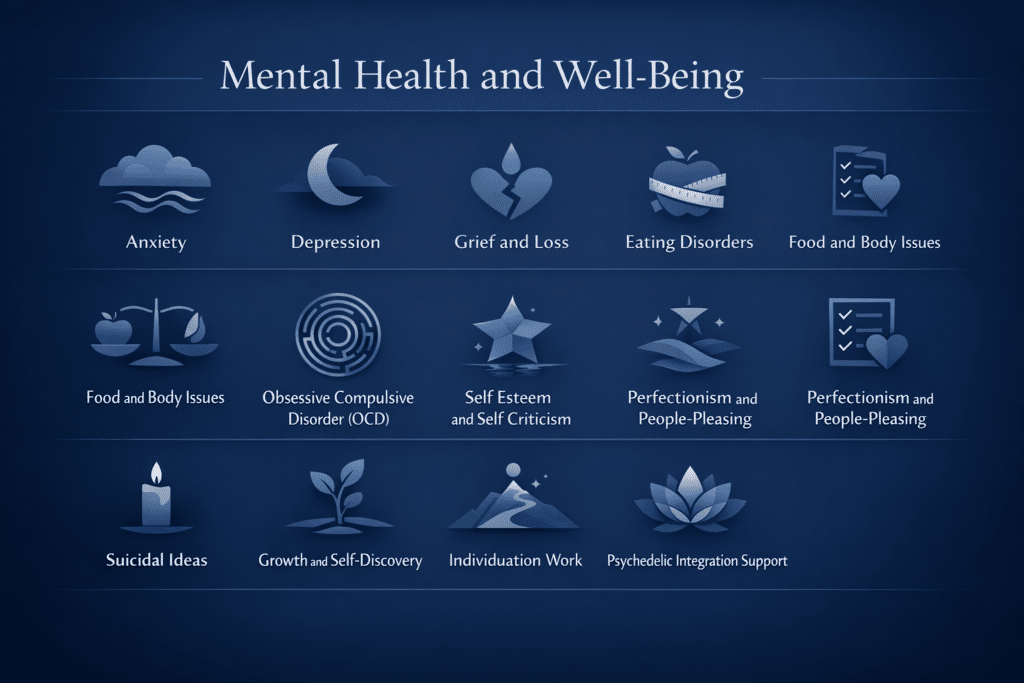
- Anxiety Therapy for anxiety in its many forms including generalized worry, panic, social anxiety, phobias, and the physical symptoms of a chronically activated stress response.
- Depression Support for depression and mood-related challenges including persistent low mood, loss of motivation, hopelessness, and the relational and physical dimensions of depressive experience.
- Grief and Loss Therapy for bereavement and the many forms grief takes, including loss of a person, a relationship, a role, a capacity, or a version of the future that was expected.
- Eating Disorders Specialized support for anorexia, bulimia, binge eating, and related conditions, addressing the psychological, relational, and identity dimensions of disordered eating in a weight-inclusive framework.
- Food and Body Issues Support for people whose relationship with food, eating, or their body causes distress, even when it does not meet the criteria for a clinical eating disorder.
- Obsessive Compulsive Disorder (OCD) Therapy for OCD including intrusive thoughts, compulsive behaviors, and the anxiety cycle that maintains them, using approaches tailored to the specific presentation.
- Self Esteem and Self Criticism Support for the internal critic, shame, and chronic feelings of inadequacy that undermine wellbeing and make it difficult to feel good enough.
- Perfectionism and People-Pleasing Addresses the exhausting patterns of striving for impossible standards or prioritizing others’ approval at the cost of one’s own needs and authentic self.
- Suicidal Ideas Compassionate, nonjudgmental support for people experiencing suicidal thoughts, provided by therapists trained in safety-informed, person-centered care.
- Growth and Self-Discovery Therapy oriented not toward crisis but toward becoming more fully oneself, understanding one’s patterns, and living with greater intention and meaning.
- Individuation Work Drawn from Jungian and depth psychology traditions, individuation work supports the process of becoming more authentically and wholly oneself over time.
- Psychedelic Integration Support for making meaning of psychedelic experiences, integrating insights into daily life, and working through challenging or disorienting material that arose during altered states.
Relationships and Communication
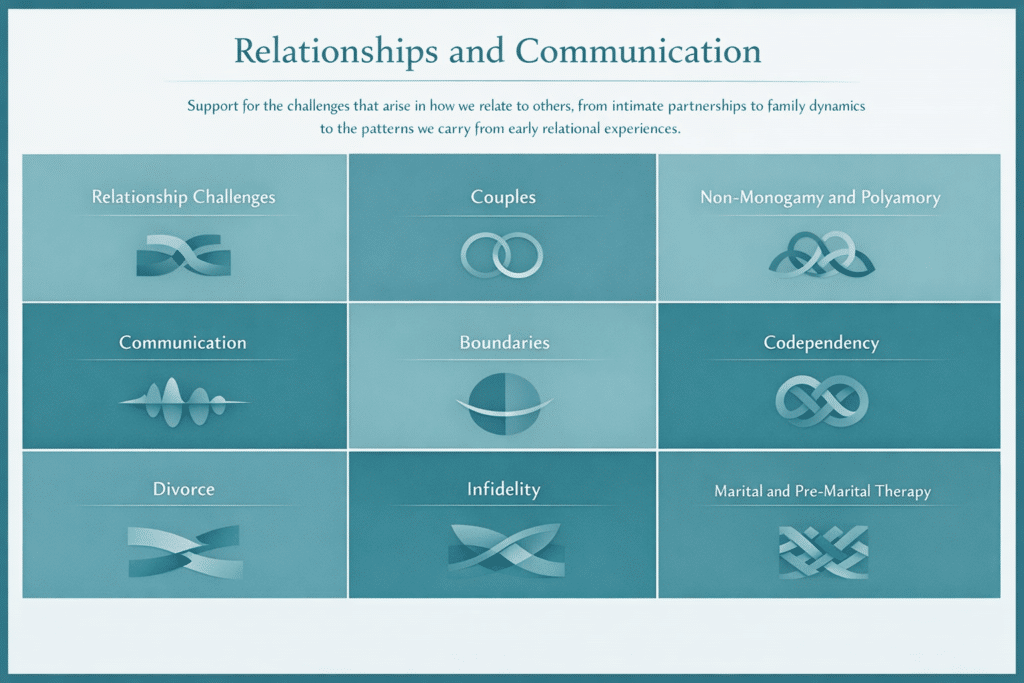
Support for the challenges that arise in how we relate to others, from intimate partnerships to family dynamics to the patterns we carry from early relational experiences.
- Relationship Issues Therapy for people navigating difficulty in relationships, whether romantic, family, or friendship, including conflict, disconnection, unmet needs, and patterns that keep repeating.
- Couples and Relationships Support for partners working through communication difficulties, conflict, distance, betrayal, or transitions in their relationship.
- Communication and Boundaries Helps people develop clearer, more effective ways of expressing needs and limits, and understand the patterns that make honest communication difficult.
- Communication and Relationships Explores how communication styles, attachment patterns, and relational histories shape the quality of our connections with others.
- Codependency Addresses patterns of over-focusing on others’ needs at the expense of one’s own, often rooted in early family dynamics, and supports the development of healthier self-relationship.
- Divorce Support for the emotional, identity, and practical dimensions of separation and divorce, including grief, co-parenting challenges, and rebuilding a sense of self.
- Infidelity Therapy for individuals and couples navigating the aftermath of betrayal, addressing trust, grief, decision-making, and the complex emotions on all sides.
- Marital and Pre-Marital Therapy Support for couples building a shared foundation, navigating differences, or working through challenges before or within marriage.
- Non-Monogamy and Polyamory Affirming support for people in ethically non-monogamous relationships, addressing the specific communication, jealousy, boundary, and identity questions these structures can raise.
Identity and Diversity
Support that centers the intersection of identity, culture, and psychological wellbeing, offered by therapists who understand that who we are in the world profoundly shapes our inner lives.
- Gender and Sexuality Affirming support for people exploring or navigating questions of gender identity and sexual orientation, in a context of respect and without pathologizing.
- Gender Questioning and Transitions Therapy for people at any stage of questioning or transitioning gender, addressing the emotional, relational, and social dimensions of that process.
- Cultural, Racial, and Ethnic Identity Development Support for the psychological dimensions of racial and ethnic identity development, navigating belonging across cultures, and making meaning of one’s cultural heritage.
- Anti-Racism and the Impacts of White Supremacy Therapy that addresses the psychological toll of racism and white supremacy on BIPOC individuals, and supports white clients in examining their own racial identity and conditioning.
- Effects of Privilege and Oppression Explores how social systems of privilege and oppression shape psychological experience, relationships, and sense of self for people across different positions.
- Men’s Issues Therapy that addresses the particular pressures and cultural conditioning affecting men, including emotional suppression, masculine identity, relationships, and help-seeking.
- Women’s Issues Support for the specific experiences and pressures affecting women, including gender-based trauma, societal expectations, reproductive concerns, and identity.
- Social Justice Therapy that holds social and systemic context alongside individual psychology, supporting clients whose distress is connected to injustice, activism, or the weight of collective suffering.
- Spirituality Support for clients for whom spiritual experience, religious background, or existential questioning is a meaningful dimension of their wellbeing and healing.
Life Transitions and Adjustment
Support for navigating change, whether anticipated or unexpected, and the identity shifts, grief, and uncertainty that major life transitions often bring.
- Life Transitions Therapy for periods of significant change including career shifts, relationship changes, relocation, graduation, retirement, and other pivotal moments that disrupt a familiar sense of self.
- Adjustment and Transition Support for adapting to new circumstances, roles, or environments when the change feels overwhelming, disorienting, or harder than expected.
- Adjusting to Life in the SF Bay Area Specific support for the particular stressors of Bay Area life including high cost of living, tech culture pressures, social isolation, and the gap between external success and internal wellbeing.
- Work Issues Therapy for work-related stress, burnout, difficult workplace relationships, career uncertainty, identity tied to professional achievement, and the toll that demanding work environments take on mental health.
- Chronic Illness Support for people living with chronic physical health conditions, addressing grief, identity change, anxiety, depression, and the relational and emotional dimensions of ongoing illness.
- Pregnancy, Prenatal, and Postpartum Therapy for the emotional dimensions of pregnancy, birth, early parenthood, fertility challenges, and perinatal loss, including postpartum depression and anxiety.
- Immigration and Acculturation Support for the psychological experience of immigration including cultural grief, identity negotiation, family separation, discrimination, and the process of building belonging in a new place.
Family and Parenting
Support for the challenges and transitions that arise within family systems, between generations, and in the particular work of raising children or navigating one’s family of origin.
- Family Conflict Therapy for families navigating significant conflict, helping members communicate more effectively, understand each other’s perspectives, and find paths through entrenched difficulties.
- Family of Origin Challenges Support for adults working through the lasting effects of their upbringing, including difficult dynamics, unresolved wounds, and patterns inherited from earlier family experience.
- Parenting and Parent Coaching Therapy and coaching for parents navigating the emotional demands of raising children, including stress, identity change, co-parenting challenges, and specific developmental concerns.
- Boundaries Support for developing and maintaining healthy limits in relationships, understanding where difficulty with boundaries comes from and building the capacity to hold them with clarity and care.
- Teens Therapeutic support specifically for adolescents, addressing the particular challenges of adolescence including identity, peer relationships, academic pressure, family dynamics, and emerging mental health concerns.
Addiction and Recovery
Support for people navigating substance use, behavioral patterns, and compulsive behaviors, including those in active recovery and those still finding their way toward change.
- Addiction Therapy for people struggling with dependence on substances or behaviors, addressing the underlying emotional, relational, and neurological dimensions of addictive patterns.
- 12-Step Recovery Therapeutic support that complements 12-step programs such as AA or NA, integrating the recovery community model with individual psychological work.
- Adult Children of Alcoholics and Addicts Addresses the lasting emotional and relational effects of growing up in a household affected by addiction, including codependency, hypervigilance, and difficulty with trust.
- Substance Abuse and Misuse Support for people whose relationship with alcohol, drugs, or other substances is causing harm, including both abstinence-based and harm reduction approaches.
- Sexual Addiction Therapeutic support for compulsive sexual behaviors that feel out of control or are causing distress, shame, or damage to relationships.
- Tech, Social Media, and Internet Addiction Addresses compulsive or problematic use of technology, gaming, social media, and online behavior and the anxiety, isolation, or avoidance that often underlies it.
Neurological and Behavioral
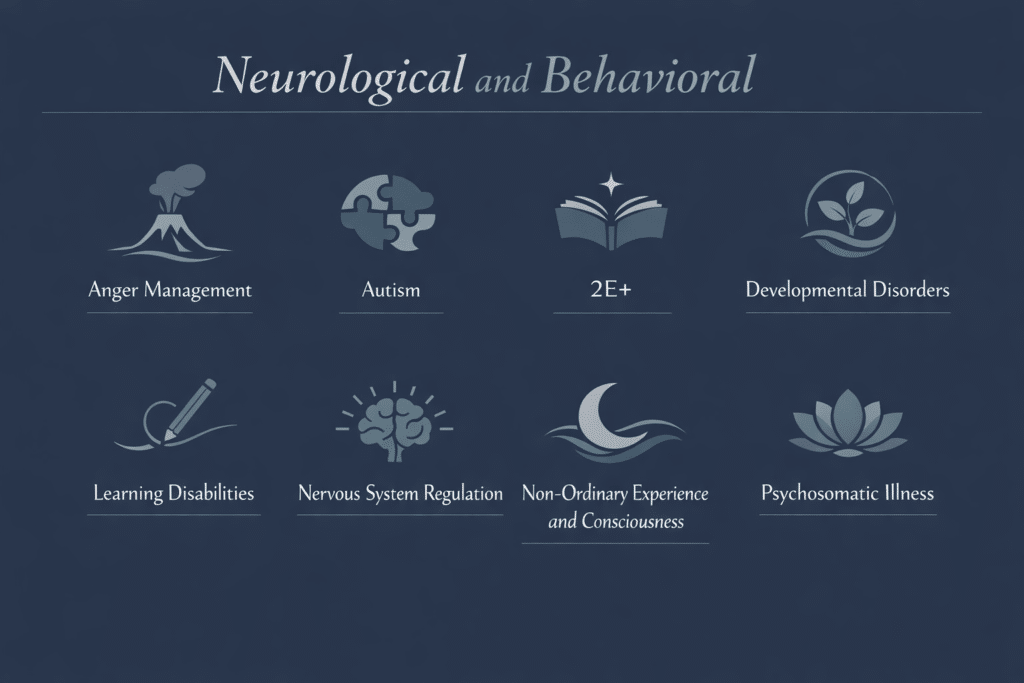
Support for people whose challenges include neurological differences, behavioral patterns, or conditions at the intersection of mind, brain, and body.
- Anger Management Therapy for people struggling with anger that feels out of control, damaging relationships or causing consequences, addressing both the expression of anger and the underlying drivers.
- Autism and 2E+ Support for autistic individuals and those who are twice-exceptional or neurodivergent, provided by therapists who understand neurodiversity and work affirmingly rather than seeking to normalize.
- Developmental Disorders Therapy for individuals and families navigating developmental conditions, supporting quality of life, self-understanding, and adaptive functioning.
- Learning Disabilities Support for people with learning differences including dyslexia, dyscalculia, and related conditions, addressing the psychological and emotional dimensions of navigating a world not designed for their minds.
- Nervous System Regulation Therapy focused specifically on building the capacity to regulate the autonomic nervous system, helpful for people with anxiety, trauma, ADHD, sensory sensitivities, and chronic stress.
- Non-Ordinary Experience and Consciousness Support for people who have had unusual experiences including dissociation, spiritual emergence, psychedelic experiences, or other states outside ordinary consciousness.
- Psychosomatic Illness Therapy for people whose physical symptoms have psychological components, or who are navigating the relationship between emotional experience and physical health.
Don’t see exactly what you’re looking for?
This list reflects the most common areas our therapists work with, but it is not exhaustive. If you’re not sure whether what you’re carrying fits neatly into any of these categories, reach out. Most people’s experience is more complex than any label. Browse our Therapist Directory or contact us and we’ll help you find the right fit.
Browse our Therapist Directory
Interested in learning about the different types of therapy and therapeutic modalities? Read our Guide to Types of Therapy.
Additional Resources
APA Dictionary of Psychology
The American Psychological Association Dictionary of Psychology is the authoritative reference source for psychological terminology, maintained by the largest professional organization of psychologists in the United States. It provides precise, peer-reviewed definitions for thousands of terms used across clinical, research, and therapeutic contexts. For anyone seeking to understand the clinical language used in therapy or mental health literature, it is the most reliable starting point available.
Psychologist World Glossary
Psychologist World’s glossary covers more than 100 key terms across the major schools of psychological thought, from psychoanalytic and behavioral approaches to Jungian concepts and cognitive theories. Entries are written for a general audience and organized alphabetically, making it easy to look up specific terms encountered in therapy or in reading about mental health. The site has been publishing psychology education content since 2010 and draws substantial readership from both students and people seeking to understand their own psychological experience.
Psychology Glossary: Academic Vocabulary for Psychology Students
Academic Marker’s psychology vocabulary resource introduces the core terminology used across psychological research and clinical practice, with particular attention to how these terms function in academic and professional contexts. It covers foundational concepts from across the major branches of psychology in accessible, clearly explained language. This resource is especially useful for people who are new to psychological concepts and want to build a working understanding of the field before or during therapy.
Social Psychology Glossary
This glossary, hosted through the Social Psychology Network, provides definitions of key terms used in social psychology research, covering concepts related to group behavior, identity, influence, attitudes, and interpersonal dynamics. Social psychology is directly relevant to many of the relational and identity concerns people bring to therapy, and this resource offers rigorous academic grounding for those terms. The Social Psychology Network is one of the largest online communities of social and personality psychologists, with resources used across university programs worldwide.