

This is a series of downloadable PDFs for understanding therapy and the topics associated with it.
Each guide in this library was developed by the Center for Mindful Psychotherapy to make clinical concepts genuinely accessible, not simplified to the point of being useless, but translated into the kind of language that lets a person recognize themselves on the page. They are built around original infographics, designed to show rather than just tell, and written with a consistent commitment: to describe human experience without pathologizing it.
You do not need a diagnosis to find something meaningful here. You do not need to be in crisis, or even certain that therapy is right for you. These guides are for anyone who has wondered whether what they carry might have a name, for people who want to understand a loved one’s experience more fully, and for clinicians looking for psychoeducational tools they can share with clients.
How to use these guides
Each guide can be read straight through or used as a reference you return to over time. Many people find it useful to read with a highlighter or notebook nearby, marking what resonates and sitting with what surprises them. There is no correct way to move through this material. Some sections will feel immediately recognizable. Others may not apply to your experience at all, and that is useful information too.
If something in a guide opens a question you want to explore further, our therapist directory is a good next step. You can browse by specialty, approach, and identity to find someone whose background fits what you are looking for.
Browse our Therapist Directory
Understanding Trauma: A Visual Guide
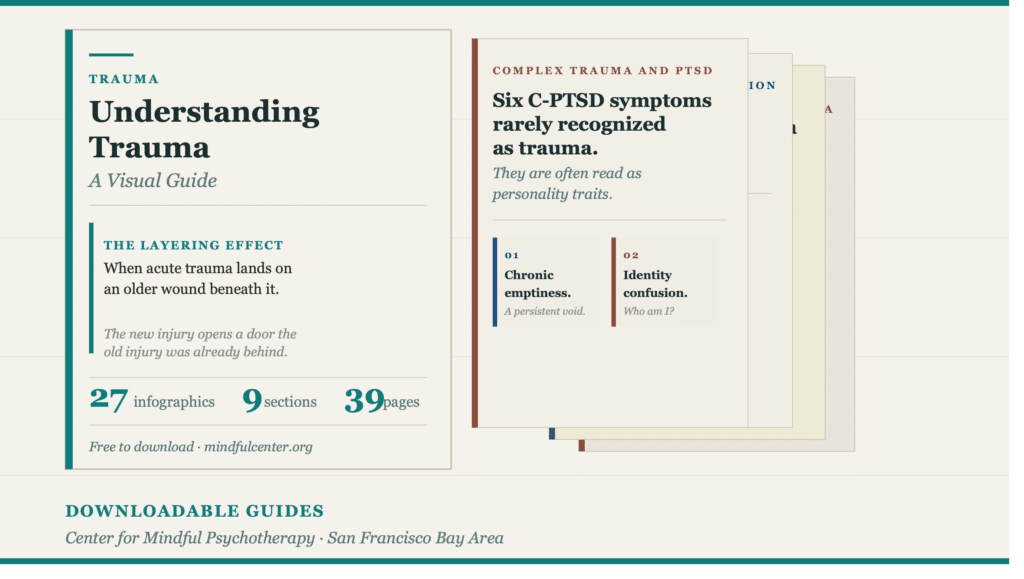
A 39-page visual guide covering nine areas of trauma-related experience, from PTSD and complex trauma to intergenerational trauma, nervous system regulation, relational trauma, childhood emotional neglect, and sexual violence. Twenty-seven original infographics translate clinical concepts into felt, accessible language.
This guide is for people exploring their own histories, loved ones seeking to understand, and clinicians looking for psychoeducational tools to share with clients.